Best 15 Ways Artificial Intelligence Is Changing Everyday Life (2026)
Yesterday my phone woke me up ten minutes early — not a wrong alarm, but AI that checked traffic overnight and knew my commute would be slower. I didn’t open an app or type a prompt. That is the real story of the ways artificial intelligence is changing everyday life: not robots in your kitchen, but invisible help running quietly in the background of your day.
Most articles give you the same lazy list. This guide goes further: 15 specific examples across your morning, health, work, money, entertainment, and home — plus the honest trade-offs, common mistakes, and a 10-minute audit showing where AI can save YOU the most time.

What’s Inside This Guide
- The Ways AI Is Changing Everyday Life Begin at Sunrise
- Your Health, Watched Around the Clock
- The Ways AI Is Changing Everyday Life at Work and School
- Your Money: Smarter Spending, Safer Accounts
- Entertainment That (Almost) Reads Your Mind
- Homes That Think Ahead
- The Honest Trade-Offs Nobody Lists
- The 10-Minute AI Audit: Find Your Own Time Wins
- 5 Mistakes People Make With Everyday AI
- Frequently Asked Questions
- The Bottom Line
The Ways Artificial Intelligence Is Changing Everyday Life Begin at Sunrise
Your first hour of the day is already an AI production — you just never bought a ticket.
1. Sleep-Phase Alarms That Wake You at the Right Moment
Smart alarms track your sleep cycles through your phone’s microphone or your watch’s motion sensors. Set a window — say 6:00 to 6:30 — and the AI wakes you during light sleep, when it’s physiologically easiest to get up. When I tested this for two weeks, mornings felt like I’d slept an extra hour on the same bedtime.
2. Commute Routing That Sees the Future
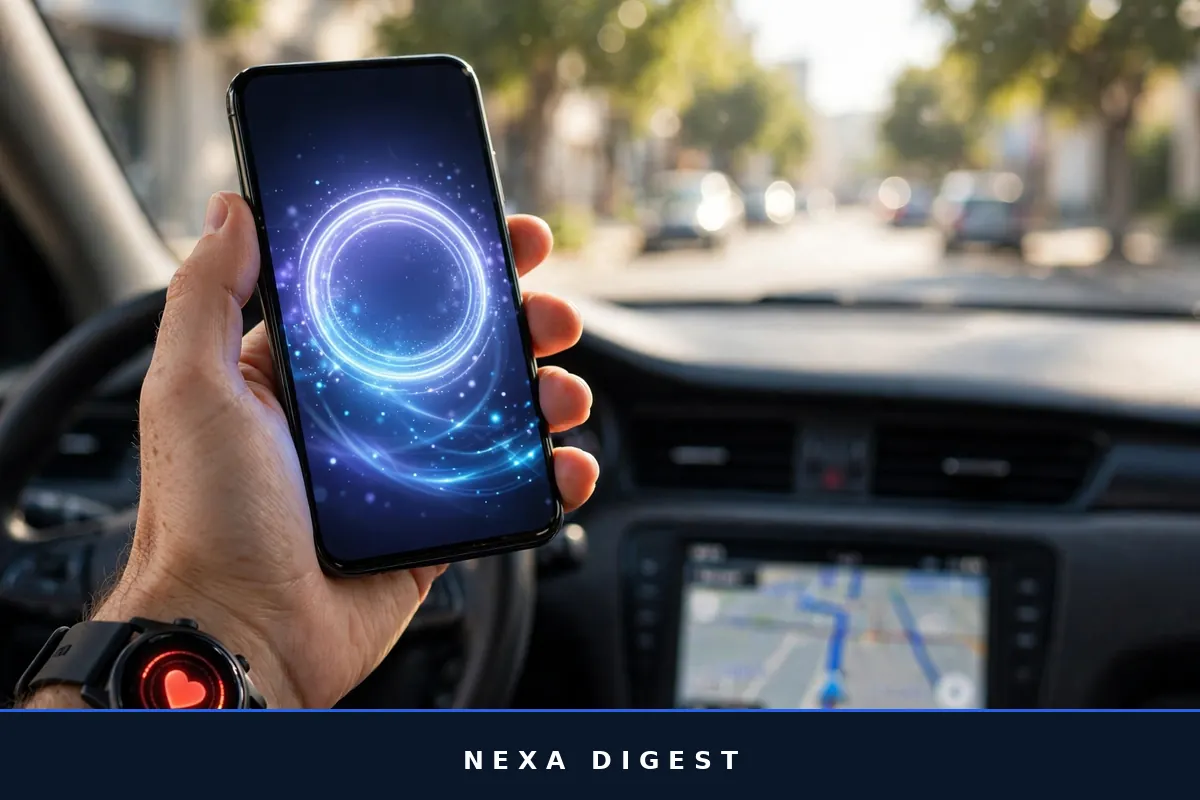
Google Maps and Waze don’t just react to traffic — they predict it, combining real-time GPS data with historical patterns to forecast congestion before it happens. Last month my usual 25-minute drive got rerouted through side streets I’d never heard of, and I arrived early while the main road sat jammed.
- Time saved: roughly 5-15 minutes per commute — hundreds of hours a year.
- Pro tip: set home and work addresses; predictions sharpen the longer the app watches your schedule.
3. Hands-Free Voice Assistants Running the Little Tasks
“Set a timer for 12 minutes.” “Remind me to call the bank at lunch.” Voice assistants turn speech into actions using natural language processing — AI that understands what you mean, not just what you said. The trick most people miss? Recurring reminders. Say it once — “remind me to take my vitamins every morning at 8” — and dozens of tiny interruptions vanish from your day.
Your Health, Watched Around the Clock
Here is where AI quietly does its most meaningful work: your health. Not as a replacement for doctors — never that — but as an early-warning system that never sleeps.
4. Wearables That Flag Problems Before You Feel Them
It learns YOUR normal, then flags the drifts — an irregular rhythm, a dip in sleep quality. Watches have caught atrial fibrillation and sleep apnea months before symptoms in countless real cases. Health note: wearables are screening tools, not diagnoses. Anything flagged deserves a real doctor’s opinion.
5. Faster, Earlier Diagnoses at the Clinic
Hospitals now use AI to read X-rays, mammograms, and eye scans — in some imaging tasks matching experienced specialists. You get faster results, shorter waits, earlier treatment. You won’t see the AI; you’ll just notice the smoother appointment.
6. Mental-Health Check-Ins That Fit Your Schedule
AI wellness apps now offer mood check-ins, guided breathing, and CBT exercises at 2 AM when no therapist’s office is open. No substitute for real therapy — but for stress and sleep anxiety, they’ve made basic mental-health support accessible to millions who’d never walk into a clinic. Health note: for serious mental health concerns, please reach out to a licensed professional or a crisis helpline in your country.
The Ways Artificial Intelligence Is Changing Everyday Life at Work and School
Walk into any office in 2026 and the biggest change isn’t robots — it’s that the boring half of everyone’s job got automated.
7. AI Drafts So You Never Start From a Blank Page
Writing tools can draft emails, reports, and cover letters in seconds — the blank-page dread is optional now. The smart way: let AI produce the rough first draft, then rewrite it in your own voice. I do this for routine emails and a 20-minute task becomes five. Publish raw output untouched, though, and it shows. AI is your first-draft partner, never your ghostwriter.
8. Meeting Notes That Write Themselves
AI transcription tools join your calls and hand you a clean summary with action items before you’ve finished your coffee. For students, the same tech turns rambling lectures into organized notes. One caution: always skim before forwarding — AI occasionally invents a confident-sounding action item nobody agreed to.
9. Personal Tutors That Never Get Tired
AI learning platforms adapt to how YOU learn. Struggling with algebra? It slows down, tries a different explanation, adds practice problems. Flying through it? It moves you ahead. This is one of AI’s most genuinely hopeful uses — a patient, one-on-one tutor for anyone with a phone, free or nearly free. Students can start with our guide on how to use ChatGPT for studying.
Your Money: Smarter Spending, Safer Accounts
Money might be the area where AI helps you most while being least visible. Your bank is already an AI fortress — here’s what’s happening inside it.
10. Fraud Detection That Blocks Thieves in Seconds
Every card swipe gets scored against your patterns: location, time, amount, merchant. Coffee at home at 8 AM? Fine. A $2,000 electronics purchase abroad at 3 AM? Blocked before the charge completes, fraud alert on your phone within seconds. Billions of transactions scored in real time — a trade-off most people gladly accept.
- What to do: turn on instant transaction notifications in your banking app. AI flags the fraud, but YOU confirm it’s real — that two-second check is the whole system working.
11. Budget Apps That Actually Read Your Spending
Modern budgeting apps don’t just log transactions — they categorize automatically, spot forgotten subscriptions, and warn you when spending drifts above normal. “You’ve spent 40% more on food delivery this month” is the nudge that changes behavior, because it arrives while you can act. Finance note: budgeting apps are great tools but not financial advisors. For debt or investment decisions, talk to a qualified professional.
12. Smarter Shopping and Price Tracking
Shopping sites recommend products from your browsing — useful, occasionally creepy, always trying to sell you something. The underused flip side: price-tracking tools watch what you want and ping you when the price drops. Set a target price, forget about it, buy only when the algorithm says the deal is real. AI working for your wallet instead of the store’s.
Entertainment That (Almost) Reads Your Mind
This is the AI you notice least because it works best: the invisible curator of your evenings.
13. Recommendation Engines Curating Your Evenings
Netflix, YouTube, Spotify, TikTok — all run recommendation algorithms that learn your taste from every click, skip, and rewatch. Most of what people watch on streaming platforms now comes from algorithmic suggestions, not browsing. When it works, it feels like a friend who knows your taste. When it doesn’t, hit “not interested” aggressively — you’re training the algorithm. These systems increasingly shape not just entertainment but what news and ideas reach you first (AI in daily life, 2026 [News]).
14. Real-Time Translation Breaking Language Barriers
This one still feels like magic. Point your phone camera at a Tokyo restaurant menu and read it in English, live. Join a video call with auto-translated subtitles. AI translation handles dozens of languages well enough for travel, business chats, and family abroad. Not perfect for poetry or contracts — but for everyday human connection, it’s quietly one of AI’s most beautiful applications. Our roundup of the best free AI tools for students covers several strong translation options.
Homes That Think Ahead
The smart home graduated from gimmick to genuinely useful. Here’s what actually earns its keep.
15. Thermostats, Lights, and Security That Learn Your Routine
A smart thermostat learns you leave at 8, return at 6, like it cool at night — then stops heating an empty house, saving real money. Smart lights fade with your bedtime. Security cameras now distinguish your dog from a stranger, so you get alerts that matter instead of 40 false alarms a day. The key insight: the best smart-home AI is the kind you set up once and never think about again. If you’re babysitting your “smart” devices, something’s misconfigured. (How AI is becoming part of everyday life [Research])
The Honest Trade-Offs Nobody Lists
Here’s the section most AI roundups skip. Every one of these conveniences runs on your data. That’s the deal — know what it costs.
- Your data is the price of personalization. Recommendation engines, voice assistants, and smart homes all learn from your behavior. Once a year, open your Google, Apple, and Amazon privacy dashboards and delete stored voice recordings and location history. Ten minutes.
- Convenience can quietly erode skills. If AI always routes your commute, you’ll stop learning the roads. Use AI for boring repetitions, but keep your hands on the skills that matter to you.
- AI scams are the dark mirror of AI convenience. Voice cloning scams now target regular people — a “grandchild” in distress, a “boss” requesting an urgent transfer. If an urgent money request arrives by call or message, hang up and call back on a number you already know.
- Over-trust is the biggest real risk. AI sounds confident even when it’s wrong. Never let AI make medical, legal, or financial decisions alone. Treat it as a brilliant assistant with zero accountability, because that’s what it is.
My honest opinion? AI in daily life is overwhelmingly a net positive — but only for people who stay in the driver’s seat. The technology rewards the skeptical user, not the passive one.
The 10-Minute AI Audit: Find Your Own Time Wins
Instead of wondering “where can AI help me,” audit your actual day:
- Step 1 — List your top 5 time drains. Be specific: “sorting email,” “meal planning,” “meeting notes.” Most people lose 2-3 hours daily to these.
- Step 2 — Mark each as AI-solvable or not. Repetitive, pattern-based, information-heavy tasks? AI-solvable. Emotional, physical, or creative-judgment tasks? Keep them human.
- Step 3 — Pick ONE. Don’t overhaul your life. Fix the single biggest AI-solvable drain this week: recurring voice reminders, commute predictions, a budget app, or an AI meeting-summary tool.
- Step 4 — Measure for two weeks. Did it actually save time? If yes, pick the next one. If no, drop it without guilt. Not every AI tool fits every life.
Most people who do this audit find 30-60 minutes a day they didn’t know they were losing. That’s the real answer to how AI changes daily life — not in the abstract, but in your calendar.

5 Mistakes People Make With Everyday AI
Watching people adopt AI over the past two years, I keep seeing the same five errors:
- Mistake 1: Trusting the first answer. AI is a confident guesser. For anything important, ask it to show its reasoning or verify with a second source.
- Mistake 2: Feeding it sensitive data. Don’t paste passwords, full financial details, or private health records into chatbots. Assume anything you type could be stored.
- Mistake 3: Using ten tools badly instead of one tool well. Pick one assistant, one notes tool, one budget app. Learn them deeply. Tool-hopping wastes the time AI was supposed to save.
- Mistake 4: Ignoring privacy settings. Every major platform lets you limit data collection and delete history. The defaults favor the company, not you — spend 15 minutes changing them.
- Mistake 5: Expecting AI to replace thinking. The best results come from human + AI together: you bring judgment and context, AI brings speed and scale. Either one alone is weaker.
Frequently Asked Questions
What are the ways artificial intelligence is changing everyday life the most?
The biggest changes are invisible: AI routes your commute, filters your email, recommends your entertainment, guards your bank account, tracks your health through wearables, and drafts your work documents. The common thread is time saved on repetitive tasks.
Is AI in daily life safe to use?
Yes, for mainstream tools from reputable companies — with precautions. Don’t share sensitive data with chatbots, review privacy settings yearly, and never let AI decide medical, legal, or financial matters alone.
Does AI listen to my conversations?
Voice assistants listen locally for their wake word and only send audio to the cloud after it triggers. Accidental triggers happen, so review and delete stored voice recordings in your Google, Apple, or Amazon privacy settings.
Will AI take over everyday jobs?
AI is changing jobs more than eliminating them. It absorbs repetitive tasks — data entry, scheduling, first drafts — shifting human work toward judgment and creativity, while new roles in AI management appear.
How can I start using AI in my daily routine?
Start with one friction point: recurring reminders, commute predictions, or an AI writing assistant. Fix your biggest time drain first with the 10-minute audit above, then expand once it works.
What are the disadvantages of AI in everyday life?
The main downsides: privacy trade-offs, over-reliance that erodes skills, AI scams like voice cloning, and over-trust in confident-sounding but wrong answers. All are manageable with healthy skepticism and basic privacy hygiene.
Can AI really detect health problems early?
Wearables can flag irregular heart rhythms and sleep apnea patterns — sometimes months before symptoms. Hospitals use AI imaging to catch diseases earlier. These are screening tools, not replacements for a doctor’s diagnosis.
How does AI personalize my shopping and entertainment?
From your clicks, watches, purchases, and skips, algorithms build a model of your taste and surface what you’ll likely enjoy. The more honest feedback you give, the better recommendations get.
Are AI scams something I should actually worry about?
Yes — awareness is your best defense. Voice cloning can fake a loved one’s voice; deepfakes can fake video. If an urgent money request arrives by call or message, hang up and call back on a number you already trust.
The Bottom Line
Two years of living with this stuff taught me: the ways artificial intelligence is changing everyday life aren’t about some dramatic future. They’re about Tuesday. The alarm that knew about traffic. The watch that noticed your heartbeat. The fraud blocked before you ever knew.
The people getting the most from AI aren’t the enthusiasts with forty apps — they’re the ones who picked two or three tools, learned them well, and stayed skeptical. Do the 10-minute audit, fix your biggest time drain this week, and let AI handle the boring parts while you keep the interesting ones. That’s just a smarter Tuesday.