Tracqueur: What It Actually Means and How Tracking Devices Work
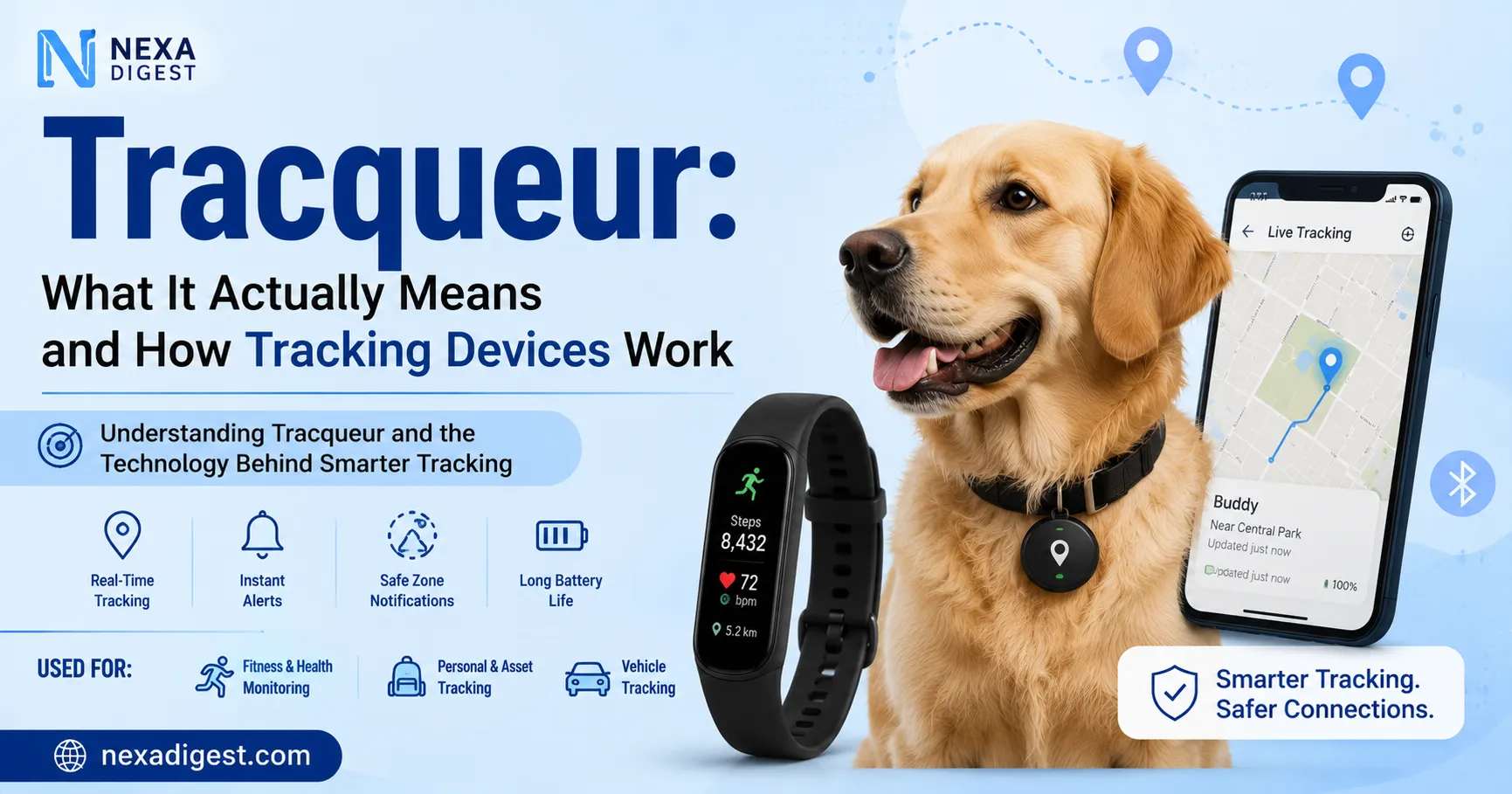
Tracqueur is a term commonly used for a tracker or tracking device that helps monitor the real-time location of vehicles, pets, personal belongings, and other valuable assets. Depending on the product, a Tracqueur may use GPS, Bluetooth, Wi-Fi, or cellular networks to provide accurate location tracking, navigation, and recovery features.
If you’re searching for Tracqueur meaning, what a Tracqueur is, or how Tracqueur devices work, this guide explains the term, the technologies behind modern tracking devices, the different types of GPS and Bluetooth trackers, their real-world applications, privacy considerations, and the key features to consider before buying one.
Quick Facts About Tracqueur
- Meaning: A tracker or tracking device used for location monitoring.
- Common Types: GPS trackers, Bluetooth trackers, vehicle trackers, pet trackers, and asset trackers.
- Tracking Technologies: GPS, Bluetooth, Wi-Fi, and Cellular Networks.
- Primary Uses: Vehicle security, pet tracking, luggage tracking, personal item tracking, and business asset management.
- Popular Examples: Apple AirTag, Tile, Samsung SmartTag, Tractive GPS, LandAirSea GPS Tracker.
Table of Contents
What Does Tracqueur Mean
Tracqueur comes from the French verb traquer, meaning to track or hunt down, plus the suffix -eur, which turns it into “one who tracks.” In everyday French, a traqueur can refer to a hunter, a stalker in the negative sense, or simply someone or something that follows a trail.
In English-language search results, the word has been adopted more loosely. It now appears as a product name or generic label for physical tracking devices, most commonly split into two categories:
- Wearable fitness trackers that monitor heart rate, GPS location during workouts, and sleep
- Small item trackers, often Bluetooth-based, designed to clip onto keys, bags, or pet collars
Because the term is used inconsistently across different sellers and blogs, it is worth checking which type of device a specific product actually is before buying anything sold under this name.
Also Read :: Donna Sicuranza: The Animal Welfare Leader Behind Connecticut’s TEAM Clinic
The Two Main Types of Devices Called Tracqueur
Tracqueur devices are generally divided into two main categories: fitness and activity trackers, and item or pet trackers. While both are designed to monitor movement or location, they use different tracking technologies and serve different purposes. Understanding these Tracqueur types helps you choose the right tracking device based on whether you want to monitor your health, locate lost belongings, or track pets and other valuable assets.
Quick Comparison
| Tracqueur Type | Primary Purpose | Common Technologies | Best For |
|---|---|---|---|
| Fitness & Activity Tracqueur | Health and activity monitoring | GPS, Bluetooth, Heart Rate Sensors | Running, cycling, fitness tracking, sleep monitoring |
| Item & Pet Tracqueur | Location tracking and recovery | Bluetooth, GPS, Wi-Fi, Cellular | Keys, wallets, luggage, pets, personal belongings |
1. Fitness and Activity Tracqueur
A fitness Tracqueur is a wearable tracking device designed to monitor physical activity, workouts, and overall health. Most fitness trackers include step counting, heart rate monitoring, sleep tracking, calorie tracking, and GPS for recording outdoor activities such as running, hiking, and cycling. Data is usually synchronized with a smartphone app, allowing users to review daily activity, fitness goals, and long-term health trends.
Key Features
- Heart rate monitoring
- Step and distance tracking
- Sleep and activity tracking
- Built-in GPS for outdoor workouts
- Smartphone notifications and app synchronization
- Health insights and fitness reports
Fitness Tracqueur devices are ideal for users who want to improve their health, monitor exercise performance, and track daily activity rather than locate lost items.
2. Item and Pet Tracqueur
An item or pet Tracqueur is a compact tracking device designed to locate valuable belongings or animals when they are lost or misplaced. These trackers can be attached to keys, wallets, backpacks, luggage, bicycles, pet collars, and other personal items. Depending on the model, they use Bluetooth, GPS, Wi-Fi, or cellular networks to provide location updates and recovery assistance.
Bluetooth-based Tracqueur devices work best over short distances and often rely on crowd-powered location networks, while GPS-enabled trackers provide real-time tracking over much larger areas, making them suitable for vehicles, pets, and high-value assets.
Common Uses
- Tracking keys and wallets
- Locating luggage while travelling
- Monitoring pets during walks or outdoor activities
- Vehicle and motorcycle tracking
- Business asset and equipment tracking
Which Tracqueur Type Should You Choose?
The best Tracqueur depends on your tracking needs.
- Choose a fitness Tracqueur if your goal is health monitoring, exercise tracking, and daily activity analysis.
- Choose an item or pet Tracqueur if you need real-time location tracking for belongings, pets, vehicles, or other valuable assets.
Understanding the differences between these Tracqueur devices makes it easier to select the right tracking technology for personal, travel, fitness, or business use.
How Tracking Technology Actually Works
Most tracking devices, regardless of brand, rely on some combination of three technologies.
GPS
GPS uses satellite signals to calculate a device’s exact position. It works best outdoors with a clear view of the sky and is the standard choice for vehicle tracking, hiking, and outdoor fitness tracking. It draws more battery power than other tracking methods, which is why standalone GPS trackers usually need regular charging or a swappable battery.
Bluetooth
Bluetooth tracking works over short distances, typically under 100 meters depending on obstacles. It is the technology behind most item trackers because it uses very little power, allowing a small tracker to run on a coin-cell battery for months or longer. Its main limitation is range: once an item is far from a paired phone or another device on the same network, Bluetooth alone cannot report its location.
Crowd-Sourced Networks and Wi-Fi
To get around Bluetooth’s range limit, companies like Apple and Tile use crowd-sourced networks. When a lost item’s tracker comes within Bluetooth range of any other user’s phone running the same app, that phone anonymously reports the item’s location. This is how a lost bag can sometimes be located even miles from its owner, without the tracker itself having GPS. Wi-Fi positioning is also used indoors, where GPS signals are weak, by comparing nearby Wi-Fi networks to a known location database.
Comparing Tracqueur-Style Devices to Established Trackers
Since most Tracqueur-branded listings don’t publish detailed specifications, it helps to understand where this category generally sits compared to well-known tracking devices.
| Feature | Item Trackers (Bluetooth-based) | Standalone GPS Trackers | Fitness Trackers with GPS |
|---|---|---|---|
| Best for | Keys, bags, wallets | Vehicles, long-distance tracking | Workouts, daily activity |
| Range | Short (relies on crowd network for distance) | Long (works almost anywhere with signal) | Depends on GPS chip, works outdoors |
| Battery life | Months to over a year | Days to weeks, needs charging | 1–7 days typically |
| Ongoing cost | Usually free after purchase | Often requires a data/SIM plan | Usually free after purchase |
| Setup complexity | Low | Moderate | Low |
This kind of side-by-side comparison is something most existing guides on this topic skip, even though it is usually the deciding factor for someone trying to choose the right device.
What to Check Before Buying Any Tracker Sold as “Tracqueur”
Because the name is used loosely across different sellers, a few checks matter more than the product name itself:
- Confirm the tracking technology. Bluetooth-only, GPS-only, or hybrid devices behave very differently in real-world use, and the difference is not always obvious from a product listing.
- Check for ongoing costs. GPS trackers often require a monthly data plan to function; Bluetooth item trackers usually do not.
- Look for network compatibility. A Bluetooth tracker is only as useful as the network behind it. Devices that work with Apple’s Find My network or a similarly large existing network tend to be found faster than those relying on a small, brand-specific app.
- Verify the seller. Generic marketplace listings without a clear manufacturer name or support page are harder to get help from if the device stops working or a warranty claim is needed.
Privacy and Safety Considerations
This is the part most articles about tracking devices leave out entirely, and it matters. The same technology that helps someone find a lost bag can also be used to track a person without their knowledge, which has become a documented safety concern with small Bluetooth trackers in particular.
A few precautions are worth knowing about:
- Many modern trackers, including Apple’s AirTag and similar devices, now include anti-stalking alerts that notify a nearby phone if an unknown tracker appears to be traveling with it over time.
- If you ever receive an unexpected “unknown tracker detected” alert on your phone, it’s worth taking seriously and checking your belongings and vehicle.
- Using a tracker to monitor another adult without their knowledge or consent raises both ethical and, in many places, legal concerns. Trackers intended for children or vulnerable family members should be used transparently and in line with local laws.
- If buying a personal safety tracker for a child or elderly relative, look specifically for models with a clear consent and notification design, not just a hidden tracking feature.
Frequently Asked Questions
Is Tracqueur a real brand?
The term is used by multiple sellers for different types of tracking products, so it functions more as a generic label than a single, verified brand. It’s important to check the specific product listing and manufacturer before buying.
What’s the difference between a GPS tracker and a Bluetooth tracker?
A GPS tracker reports its own location directly using satellites and works over long distances, usually requiring a data plan. A Bluetooth tracker has a short range on its own but can use a crowd-sourced network of other users’ phones to report location over greater distances, usually without ongoing fees.
Do tracking devices need a subscription?
It depends on the type. Standalone GPS trackers, especially for vehicles, often require a monthly data plan. Bluetooth item trackers typically do not require a subscription.
Can someone use a tracker to follow me without my knowledge?
Unfortunately, yes, which is why many trackers now include built-in anti-stalking alerts. If your phone warns you about an unknown tracker traveling with you, don’t ignore it.
Which type of Tracqueur tracker is best for a pet?
For pets that roam within a neighborhood, a Bluetooth tracker on a large network works well. For pets that may travel farther or in areas with fewer nearby phones, a GPS-based pet tracker with its own data connection is generally more reliable.
Key Takeaways
Tracqueur is not a single, clearly defined product. It’s a term that spans a French dictionary word, wearable fitness trackers, and small item trackers, which is exactly why search results on this topic are so inconsistent. Understanding the underlying technology, whether GPS, Bluetooth, or a hybrid of the two, is more useful than focusing on any one product name, since it lets you compare devices on the specifications that actually matter: range, battery life, ongoing cost, and network size. Privacy and consent should also be part of that decision, not an afterthought, given how tracking technology can be misused as easily as it can be helpful.