AI Tutoring Apps for Students: Benefits, Limitations, and What to Expect in 2026
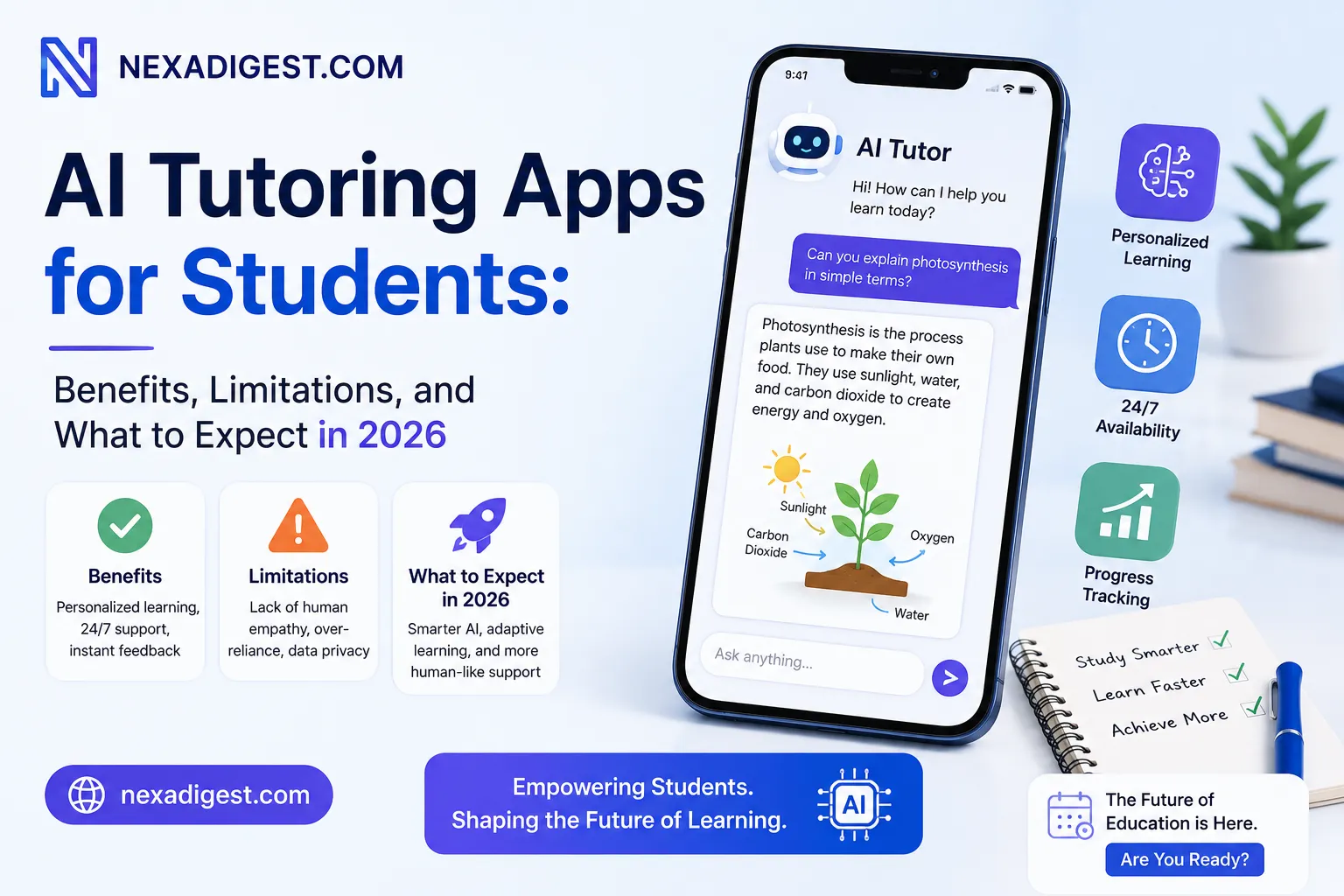
A student stuck on a calculus problem at midnight used to have two options: wait until class the next day or struggle alone. Today, AI tutoring apps for students offer instant, patient, step-by-step help at any hour. This shift has changed how millions of students approach homework, test prep, and everyday learning.
But like any fast-growing technology, AI tutoring apps for students come with real strengths and genuine limitations that parents, students, and educators should understand clearly before relying on them too heavily. This article breaks down how these tools actually work, where they excel, where they fall short, and what the coming year likely holds for this space.
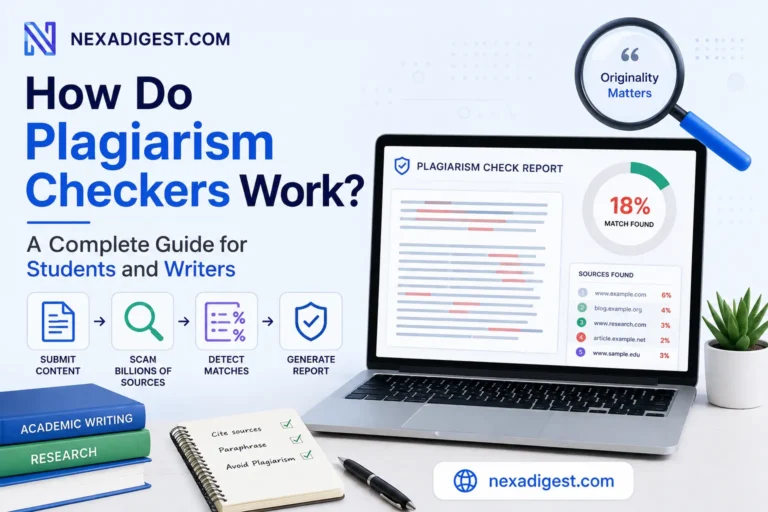
Also Read :: How Do Plagiarism Checkers Work? A Complete Guide for Students and Writers
Table of Contents
What Are AI Tutoring Apps for Students?
AI tutoring apps for students are software platforms that use artificial intelligence, usually large language models, to provide personalized academic support. Popular examples include Khanmigo from Khan Academy, Photomath, Socratic by Google, and various subject-specific platforms covering everything from algebra to essay writing.
These tools typically work by analyzing a student’s question or uploaded homework problem, then generating a step-by-step explanation rather than just handing over a final answer. Many platforms also adapt to a student’s pace, offering easier or harder follow-up questions based on how well the student is understanding the material.
The Real Benefits These Tools Offer
There’s a reason AI tutoring apps for students have grown so quickly in popularity. The genuine advantages are worth understanding clearly.
Availability around the clock means students studying late at night or during weekends aren’t stuck waiting for office hours or a scheduled tutoring session. This matters especially for students juggling part-time jobs or family responsibilities during traditional school hours.
Judgment-free repetition allows students to ask the same question multiple times without feeling embarrassed. A human tutor might show subtle frustration after the fifth explanation of the same concept, while an AI tool simply rephrases the explanation again.
Personalized pacing adjusts difficulty based on individual performance, something difficult to achieve in a classroom of thirty students moving at one shared pace. This can be especially helpful for students who need extra time to build foundational skills before moving forward.
Immediate feedback on practice problems helps students correct misunderstandings right away, rather than discovering an error days later when a graded assignment comes back.
Lower cost compared to private tutoring makes academic support accessible to families who couldn’t otherwise afford one-on-one human tutoring, which often costs significantly more per hour.
Where AI Tutoring Apps for Students Fall Short
Despite genuine strengths, these tools have real limitations that deserve honest discussion.
1. They Can Reinforce Passive Learning
Some AI tutoring apps for students risk becoming answer-generators rather than genuine teaching tools if students simply copy explanations without engaging with the reasoning. The best platforms actively require the student to attempt steps themselves, but not every tool enforces this well.
2. They Lack Deep Understanding of Individual Students
A human teacher who has worked with a student for months understands their specific learning style, common mistakes, and emotional relationship with the subject. Current AI tutoring apps for students, no matter how personalized their algorithms claim to be, don’t carry this kind of long-term relational understanding.
3. Accuracy Isn’t Always Perfect
AI models occasionally generate incorrect explanations, especially for advanced or highly specialized academic content. A student without enough background knowledge to spot the error might absorb incorrect information confidently presented as fact.
4. They Can’t Replace Social and Emotional Learning
Classroom learning teaches collaboration, discussion skills, and how to work through disagreement with peers. AI tutoring apps for students, by design, are largely solitary tools that don’t replicate the social dimension of learning.
5. Overreliance Can Weaken Independent Problem-Solving
If a student turns to an AI tool the moment they hit any difficulty, they miss out on the productive struggle that builds genuine problem-solving resilience, a skill that matters far beyond any single subject.
How Different Age Groups Use These Tools Differently
Younger students, typically in elementary and middle school, benefit most from this kind of support when used under adult supervision, focusing on foundational skill-building like reading comprehension and basic math fluency. Without guidance, younger students are more likely to simply seek answers rather than engage with the learning process.
High school students often use these platforms for exam preparation, homework support across multiple subjects simultaneously, and clarifying concepts before tests. At this stage, students generally have enough independence to use the tools responsibly, though guidance around avoiding answer-copying remains important.
College and university students frequently turn to these platforms for specialized subject support, particularly in technical fields like calculus, statistics, and computer science, where step-by-step problem walkthroughs are especially valuable for building procedural understanding.
What Educators and Parents Should Watch For
Several practical signs indicate whether a student is using this kind of support in a healthy, productive way:
- Are they attempting the problem first, or immediately asking the tool for the full solution?
- Can they explain the concept in their own words afterward, or do they only recognize the AI-generated explanation without internalizing it?
- Is their independent test performance improving, or only their homework completion speed?
- Are they using the tool to understand mistakes, or simply to finish assignments faster without reflection?
These questions help distinguish genuine learning support from a shortcut that quietly undermines skill development over time.
The Technology Behind Personalized Tutoring
Most modern platforms rely on large language models trained specifically to generate step-by-step reasoning rather than direct answers. When a student submits a problem, the system doesn’t just retrieve a pre-written solution; it generates a fresh explanation tailored to the specific numbers, phrasing, or context in that student’s question.
Some platforms layer additional systems on top of the core AI model, including adaptive difficulty engines that track a student’s performance across sessions and adjust future questions accordingly. Others incorporate image recognition, allowing students to photograph a handwritten problem and receive an instant breakdown, a feature that has made tools like Photomath especially popular for quick homework checks.
The more advanced platforms also build in guardrails designed to prevent students from simply extracting a final answer. Instead of revealing the solution immediately, the system might ask a guiding question first, nudging the student toward figuring out the next step independently before offering direct help.
Comparing AI Support to Traditional Tutoring
| Factor | Digital Tutoring Tools | Human Tutors |
|---|---|---|
| Availability | 24/7, instant | Limited to scheduled sessions |
| Cost | Often free or low subscription | Typically higher hourly rates |
| Personalization | Algorithm-based, pattern-driven | Relationship-based, built over time |
| Emotional support | Limited | Strong, especially for struggling students |
| Consistency | Same quality every session | Can vary by tutor and day |
| Social learning | Minimal | Present through discussion and interaction |
| Error correction | Fast, but occasionally imperfect | Slower, but contextually informed |
This comparison shows why many families find the strongest results come from combining both approaches rather than choosing one exclusively.
The technology behind AI tutoring apps for students continues evolving quickly, and several trends are shaping what’s coming next.
Better integration with school curricula is emerging, as more platforms partner directly with school districts to align tutoring content with actual classroom lesson plans, rather than offering generic academic support disconnected from what students are studying that week.
Voice-based tutoring is expanding, allowing students to talk through problems conversationally rather than typing, which more closely mimics the experience of working with a human tutor.
Improved error-checking and citation of sources is becoming standard, as developers respond to accuracy concerns by building in verification steps and clearer sourcing for factual claims.
Emotional and motivational support features are being added to some platforms, offering encouragement and study habit coaching alongside pure academic content, recognizing that learning struggles are often as much about motivation as raw understanding.
Stricter school policies around usage are also likely, as more institutions develop clear guidelines distinguishing acceptable AI tutoring support from academic dishonesty, similar to how AI writing detection policies developed over the past few years.
Choosing the Right Tool for Your Needs
Not every platform among AI tutoring apps for students serves the same purpose. Consider these factors when choosing:
- Subject specialization matters, since a tool built specifically for math problem-solving often performs better than a general-purpose AI assistant applied to the same task.
- Step-by-step explanation quality should be a priority over tools that simply provide final answers without genuine teaching value.
- Privacy and data policies deserve attention, especially for younger students, since some platforms collect and store significant amounts of personal learning data.
- Cost structure varies widely, from free basic versions to premium subscriptions offering deeper personalization and expanded subject coverage.
Frequently Asked Questions
Can AI tutoring apps replace a human tutor completely?
Not entirely. These tools handle repetitive practice and instant explanations well, but lack the long-term relational understanding, emotional support, and adaptive teaching judgment a human tutor provides.
Are AI tutoring apps for students safe for younger children to use alone?
Supervision is generally recommended for younger students, both to ensure the tool is used for genuine learning rather than answer-copying and to monitor data privacy.
Do schools allow AI tutoring apps for homework help?
Policies vary significantly between institutions. Many schools distinguish between using these tools for understanding concepts versus using them to complete graded assignments directly, so checking specific classroom policies matters.
Do AI tutoring apps for students work equally well across all subjects?
No. These tools tend to perform strongest in subjects with clear, structured problem-solving steps, like math and science, and somewhat less consistently in subjects requiring nuanced interpretation, like literature analysis or historical argumentation.
How accurate are AI tutoring apps compared to textbooks?
Accuracy has improved significantly, but occasional errors still occur, especially for advanced or niche topics, so cross-checking important information remains a good habit.
A Balanced Path Forward
The healthiest approach treats digital tutoring support as one tool in a larger toolbox, not a replacement for effort, curiosity, or human connection in learning. Parents and educators who stay involved, checking in on how these tools are used rather than banning or fully outsourcing homework help to them, tend to see the best outcomes. Students who learn to use AI support as a stepping stone toward independent understanding, rather than a shortcut around it, build skills that last well beyond any single assignment or test.
Final Thoughts
AI tutoring apps for students represent a genuinely useful addition to modern education, offering accessibility and personalized pacing that traditional tutoring often can’t match at scale. But these tools work best as a supplement to human teaching, not a full replacement for it.
The most successful students treat AI tutoring apps for students as one part of a broader learning toolkit, combining instant digital support with classroom instruction, human mentorship, and genuine independent effort. As the technology matures through 2026 and beyond, the tools will likely keep improving, but the fundamentals of real learning, curiosity, effort, and reflection, will remain firmly human. Families who approach this technology thoughtfully, treating it as a supplement rather than a substitute for real engagement, are the ones most likely to see genuine, lasting academic growth.