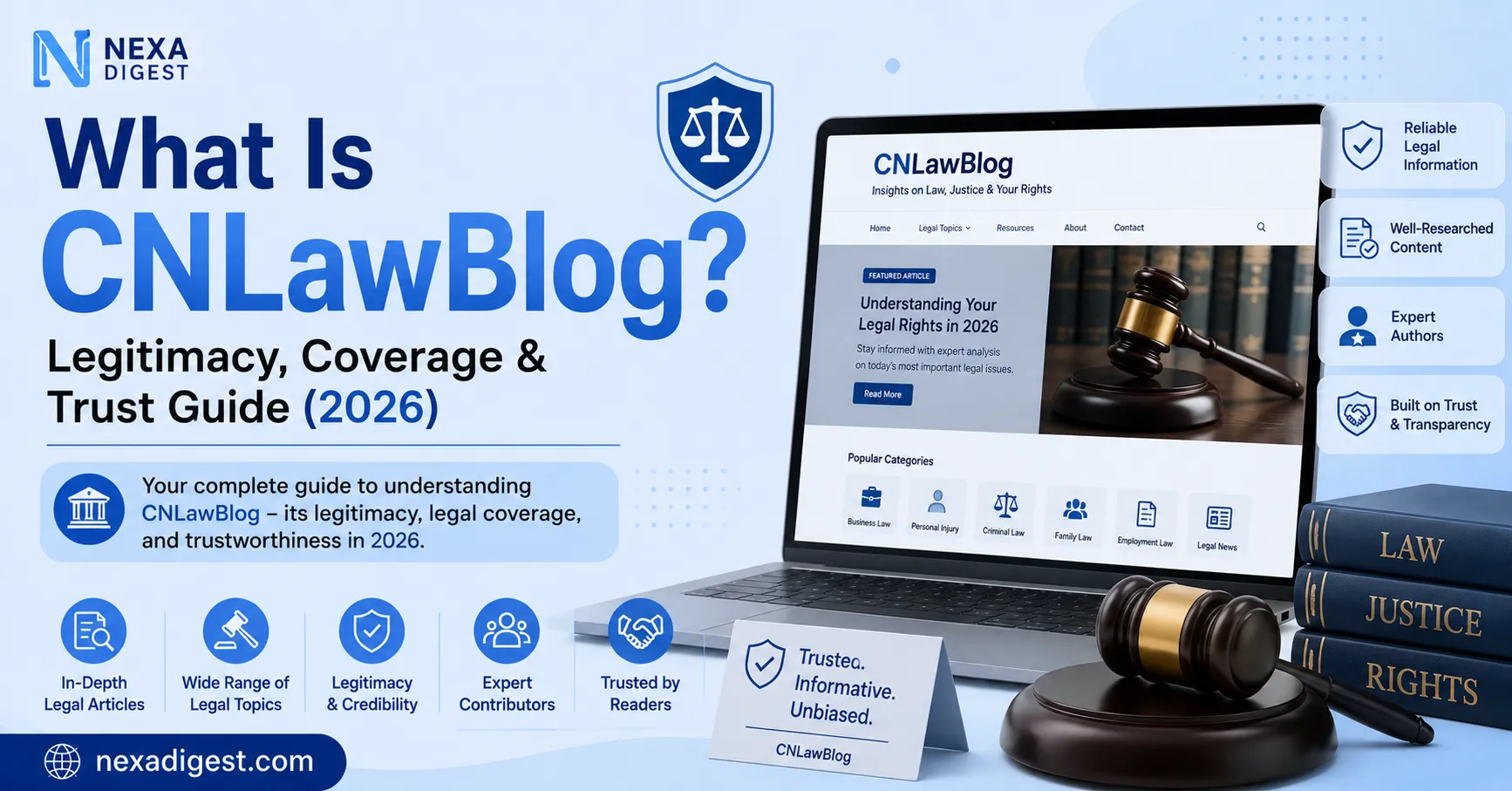
CNLawBlog is an independent, English-language legal content website that publishes articles on Chinese business law, intellectual property (IP), cross-border trade, regulatory compliance, and related legal topics. Although its name is similar, CNLawBlog is separate from Harris Sliwoski LLP’s China Law Blog. Because of the similarity in branding, many users mistakenly assume the two websites are affiliated.
If you’re searching for what is CNLawBlog, is CNLawBlog legitimate, or can CNLawBlog be trusted, this guide provides a clear overview of the site’s purpose, legal coverage, and key differences from other well-known legal resources.
In This Guide, You’ll Learn
- What CNLawBlog is and the legal topics it covers.
- Whether CNLawBlog is legitimate and what factors to consider when evaluating its credibility.
- The difference between CNLawBlog and Harris Sliwoski’s China Law Blog.
- Why the two websites are frequently confused by readers.
- How to identify official legal resources and avoid confusing them with similarly named websites.
- Who can benefit from reading CNLawBlog, including business owners, importers, exporters, legal professionals, and international companies involved in China-related business.
- Frequently asked questions about CNLawBlog, its editorial focus, and its legal content.
Before relying on any legal information website, it’s important to verify the source, review the author’s credentials, and understand whether the content is intended for general educational purposes or professional legal advice. This guide is designed to help readers make an informed decision while clearly distinguishing CNLawBlog.com from the attorney-run China Law Blog published by Harris Sliwoski LLP.
Table of Contents
What Is CNLawBlog?
CNLawBlog is a legal information website that publishes plain-English articles on Chinese business law topics, including contracts, intellectual property, foreign investment, and regulatory compliance. It is designed to make complex legal concepts more accessible to founders, business owners, and general readers who don’t have a legal background.
Unlike a law firm’s official blog, CNLawBlog does not appear to operate as a licensed legal practice, and its content should be treated as general information rather than legal advice specific to any individual situation. Public reporting on the site notes that it publishes across several related domains, which is one of the more important things to understand before relying on it.
Also Read :: What Is Oncepik? Definition, Features & How It Works (2026)
Who Owns CNLawBlog?
This is the single most important question anyone researching CNLawBlog should ask, and it’s also the one with the least clear answer. Based on available public information, there is no verified evidence connecting CNLawBlog to Harris Sliwoski LLP, the law firm that operates the well-known, attorney-authored China Law Blog. CNLawBlog does not consistently list named authors with verifiable legal credentials or bar admissions, which stands in contrast to Harris Sliwoski’s China Law Blog, where every post is attributed to a specific, licensed attorney.
CNLawBlog also operates across multiple domain variations rather than a single consolidated website, which makes ownership harder to trace and is generally considered a caution flag for any site publishing legal or financial information.
Is CNLawBlog Legitimate?
CNLawBlog does appear to be a real, functioning website rather than an outright scam or phishing operation, based on available information. That said, “legitimate” and “authoritative” are not the same thing, and this distinction matters for legal content specifically.
Several legitimacy signals are missing or unclear compared to more established legal resources:
- No consistently named, licensed attorney authors
- No verifiable bar admissions or professional credentials tied to specific articles
- Multiple domain variants publishing similar content, which complicates verifying a single authoritative source
- Inconsistent details across third-party descriptions of the site’s founding date and history
None of this necessarily makes CNLawBlog fraudulent, but it does mean it falls well short of the transparency standard set by attorney-run legal publications.
Is CNLawBlog Trustworthy?
Trustworthiness for a legal information site depends heavily on authorship, citation practices, and how the content is used. CNLawBlog appears most useful as an introductory, plain-language resource rather than a substitute for professional legal research or advice.
Where CNLawBlog Falls Short on Authority
Without named, licensed authors, readers have no way to verify the legal background of whoever wrote a given article. This matters more in legal content than in most other content categories, since inaccurate legal information can lead to real financial or compliance consequences for a business.
Where CNLawBlog May Still Be Useful
For someone who simply wants a plain-English starting point on a legal concept, before consulting an actual attorney, CNLawBlog’s simplified explanations may still serve a purpose, provided the reader understands its limitations and does not treat it as a final source.
What Topics Does CNLawBlog Cover?
CNLawBlog’s content generally spans a range of China-focused business law topics, including:
- China business law and market entry
- Manufacturing agreements and supply chain contracts
- Trademark and intellectual property protection
- Foreign investment regulations
- Regulatory compliance and import/export rules
- Contract enforcement and dispute resolution
- Employment law as it applies to foreign companies operating in China
This topic range overlaps significantly with subjects covered by more established, attorney-authored resources, which is part of why the two are so often confused.
CNLawBlog Review
Pros
- Publishes in accessible, non-technical language for non-lawyers
- Covers a genuinely relevant range of China business law topics
- Free to access, with no paywall on published content
Cons
- No consistently verified, named legal authorship
- Operates across multiple domains, making the authoritative source unclear
- Not affiliated, as far as available evidence shows, with any licensed law firm
- Cannot be relied on for specific legal advice or high-stakes business decisions
Who Should Read It
CNLawBlog may work as a very general starting point for readers who want a plain-language overview of a legal topic before doing deeper research. It is not appropriate as a primary source for business owners, importers, or investors making real decisions involving legal or financial risk.
Harris Sliwoski and CNLawBlog: Are They the Same?
No. This is the most important distinction in this entire guide. Harris Sliwoski LLP operates China Law Blog at harris-sliwoski.com, founded by attorney Dan Harris, with articles attributed to named, practicing attorneys with verifiable credentials in Chinese business law. This is the established, attorney-run resource with a long, verifiable publication history.
CNLawBlog, despite the similar name and overlapping subject matter, is a separate website with no confirmed connection to Harris Sliwoski LLP. Some third-party articles online incorrectly describe CNLawBlog as being “operated by Harris Sliwoski,” but this claim is not consistently supported by verifiable evidence and should be treated with caution. When in doubt, the safest approach is to go directly to harris-sliwoski.com for attorney-authored China legal content.
Beware of CNLawBlog Copycat Sites
The confusion around CNLawBlog is compounded by the existence of multiple similar domains and a wave of third-party “review” articles, many of which repeat inconsistent details about the site’s origin, ownership, and legitimacy. This pattern, a legal-sounding name, multiple domain variants, and a cluster of SEO-style review articles, is a common structure behind content designed to capture search traffic rather than to inform.
Warning signs of copycat or low-trust legal content sites generally include:
- Multiple domain variants (.com, .net, .org, .business) publishing similar or duplicate content
- No named, verifiable authors with legal credentials
- Contradictory details about the site’s founding or ownership across different sources
- Content that closely mirrors an established, trusted brand’s name
How to Verify Whether CNLawBlog Is Real
Before relying on any legal content site, especially one involving cross-border business law, run through this basic verification checklist:
- Check for HTTPS — a secure connection is a baseline requirement, though not proof of authority on its own
- Look for named authors — search their name independently to confirm bar admission or legal credentials
- Confirm the original URL — go directly to a known, bookmarked source rather than clicking search results or shared links
- Look for law firm information — a real law firm blog will list office locations, attorney bios, and direct contact information
- Check content freshness — legal information changes frequently, and outdated posts are a risk in fast-moving regulatory areas
- Watch for suspicious ads or unrelated content — legal blogs with heavy, unrelated advertising are a lower-trust signal
CNLawBlog vs Other Legal Resources
| Resource | Authorship | Best For |
|---|---|---|
| CNLawBlog | Unclear/unverified | General, plain-language overviews |
| China Law Blog (Harris Sliwoski) | Named, licensed attorneys | Authoritative China business law insight |
| Lexology | Verified law firm contributors | Professional-level legal analysis |
| JD Supra | Verified law firm and attorney contributors | Broad legal industry commentary |
| Reuters Legal | Professional legal journalists | Legal news and major case coverage |
| Government sources (MOFCOM, USPTO, WIPO) | Official government bodies | Primary regulatory and filing information |
Who Should Read CNLawBlog?
Given its limitations, CNLawBlog is best suited for readers doing very early-stage, general research, such as students getting a first introduction to Chinese business law concepts, or general readers curious about a topic without an immediate business decision at stake. It is not well suited for business owners, importers, exporters, or investors making real operational or legal decisions, who should rely on attorney-authored resources like Harris Sliwoski’s China Law Blog or direct consultation with a licensed attorney.
Frequently Asked Questions
What is CNLawBlog?
CNLawBlog is an independent legal content website covering Chinese business law topics in plain-English format, separate from Harris Sliwoski LLP’s China Law Blog despite the similar name.
Is CNLawBlog legitimate?
It appears to be a real, functioning website rather than a scam, but it lacks the named, verified legal authorship found on more authoritative legal resources.
Is CNLawBlog owned by Harris Sliwoski?
No verified evidence supports this connection. Harris Sliwoski LLP operates its own, separate China Law Blog at harris-sliwoski.com with named, licensed attorney authors.
Is CNLawBlog free?
Yes, its published content is freely accessible without a paywall, based on available information.
Can businesses rely on CNLawBlog for legal decisions?
No. It should be treated as general information only, not a substitute for advice from a licensed attorney, particularly for decisions involving real legal or financial risk.
Does CNLawBlog replace legal advice?
No legal blog, including CNLawBlog, replaces personalized legal advice from a qualified, licensed attorney familiar with your specific situation.
Final Words
CNLawBlog is a real, accessible legal content site, but it falls short of the transparency and verified expertise found in attorney-run resources like Harris Sliwoski’s China Law Blog. Its biggest weaknesses are unclear authorship, multiple domain variants, and no verified affiliation with a licensed law firm, despite the name similarity that causes frequent confusion. It may work as a very general, introductory resource, but for anything involving real business, legal, or compliance decisions in China, readers should go directly to attorney-authored sources or consult a licensed professional.
Disclaimer: This article is for informational purposes only and does not constitute legal advice. It does not establish an attorney-client relationship. For advice on a specific legal matter, consult a licensed attorney.