Balanced Diet for Beginners: Simple Daily Meal Guide
Everyone around you seems to have nutrition figured out. Your coworker swears by keto, your aunt posts miracle cleanses, and your feed is full of green smoothies you will never make. Meanwhile you are in the grocery aisle wondering if frozen pizza counts as dinner. (It does — just not every night.)
If you want to eat better but do not know where to start, this balanced diet for beginners guide is for you. No crash diet, no forbidden foods, no dehydrator required. Just a realistic way of eating that works for real life — the plate method, a grocery list, a 7-day meal plan, and the mistakes to dodge. Let us get into it.
What Is Inside This Guide
- What Is a Balanced Diet, Really?
- The 5 Food Groups Every Beginner Should Know
- The Balanced Plate Method: Your Simplest Daily Rule
- How Much Should You Eat? Portions Without Counting Calories
- Your First Balanced Grocery List
- 7-Day Meal Plan: A Balanced Diet for Beginners in Action
- Smart Snacking: The 2-Macro Rule
- Eating Out Without Ruining Your Progress
- How to Read a Nutrition Label in 30 Seconds
- 7 Beginner Mistakes to Avoid
- Balanced Eating on a Budget
- Vegetarian and Vegan Tweaks
- Balanced Diet for Beginners: Your Questions Answered
- The Bottom Line
What Is a Balanced Diet, Really?
Here is the truth social media will not tell you: a balanced diet is not a weight-loss program, a 30-day challenge, or a list of forbidden foods. It is an eating pattern that gives your body the nutrients it needs, in roughly the right proportions, most of the time. No magic, no misery.
Two nutrient types matter. Macronutrients — carbs, protein, fat — are fuel and building material. Micronutrients — vitamins and minerals — handle immunity, bones, and everything between. Add fiber and water and that is the whole game. A balanced diet for beginners means getting enough of all of these without turning dinner into a math exam.
Key word: pattern. One pizza night ruins nothing; one salad fixes nothing. What counts is what your weeks look like — start imperfectly and still win.
This is scientific consensus, not blogger opinion. The US Dietary Guidelines [Gov] describe a healthy pattern built on vegetables, fruits, whole grains, lean proteins, and low-fat dairy, limiting added sugars, saturated fat, and sodium. The WHO calls for 400+ grams of fruit and veg daily, under 10% of calories from free sugars, under 5 grams of salt [Research]. Boring? Maybe. True? Absolutely.
The 5 Food Groups Every Beginner Should Know
Every balanced plate comes from the same five building blocks. Learn them once and you can build a healthy meal anywhere.
1. Vegetables and Fruits
The foundation — be generous at every meal. Fresh, frozen, or tinned in water or juice (not syrup) all count. Eat the rainbow: leafy greens, carrots, sweet potatoes, tomatoes, peppers, berries, apples, bananas, citrus. Frozen veg is picked at peak ripeness and often cheaper than fresh, so stock the freezer guilt-free.
2. Whole Grains and Starchy Foods
Your main energy source. Pick whole-grain versions: brown rice, oats, quinoa, whole-wheat bread and pasta, barley, skin-on potatoes. Their fiber steadies blood sugar and keeps you full far longer than refined white versions.
3. Protein Foods
Repairs muscles, supports immunity, and makes meals satisfying. Spread it through the day: chicken, turkey, fish (twice weekly, one oily), eggs, beans, lentils, chickpeas, tofu, Greek yogurt, cottage cheese. Struggle with breakfast? These high-protein breakfast ideas fix that.
4. Dairy and Alternatives
Calcium and vitamin D for bones at every age. Milk, yogurt, and cheese in sensible amounts, or fortified soy or oat milk — check labels for added sugars. Lactose intolerant? Lactose-free or fortified alternatives cover it.
5. Healthy Fats and Oils
Fat is not the villain; the type counts. Favor unsaturated fats — olive oil, nuts, seeds, avocado, oily fish — in modest amounts. Ease off butter, coconut oil, fatty meats, and industrial trans fats in ultra-processed snacks.
Unofficial sixth group: water. Make it your default drink — 6 to 8 glasses a day — and treat sodas, energy drinks, and syrupy coffees as occasional guests.
The Balanced Plate Method: Your Simplest Daily Rule
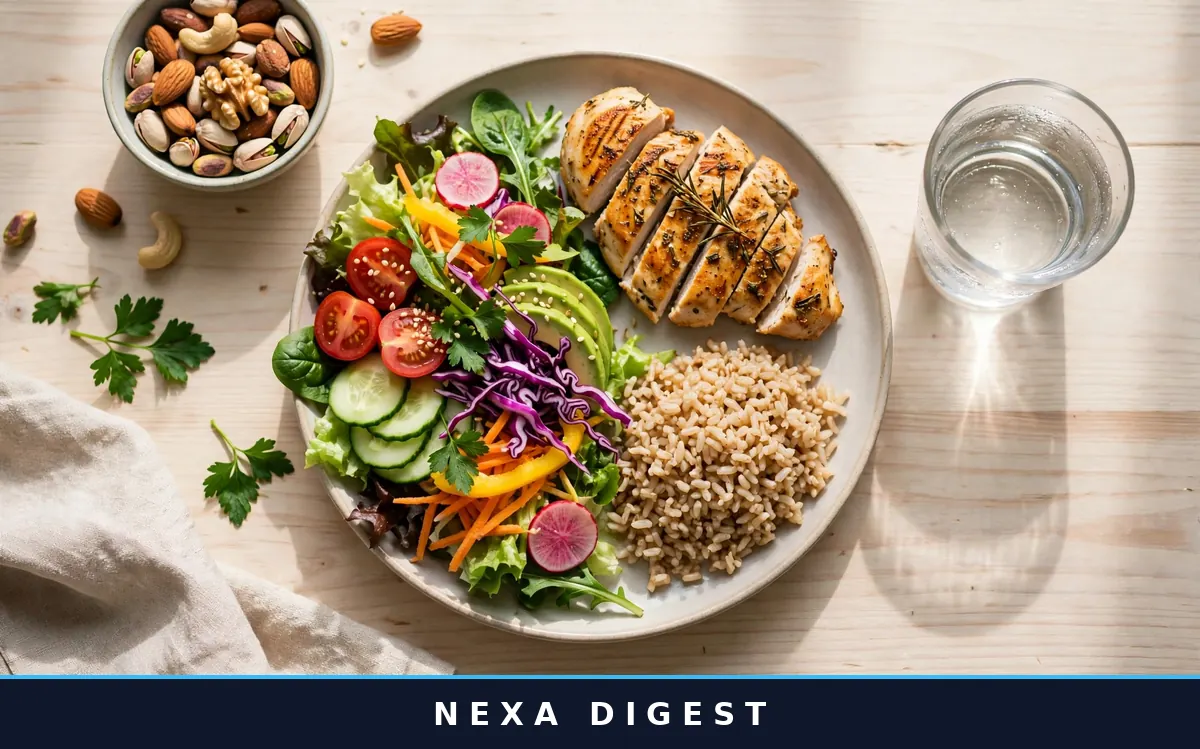
Forget complicated rules. The easiest way to eat a balanced diet for beginners is a visual formula you can apply to any meal in about three seconds:
- Half the plate: vegetables and fruit
- One quarter: whole grains or starchy foods
- One quarter: protein foods
- On the side: a little healthy fat and a glass of water
This mirrors the UK’s official Eatwell Guide [Gov]. No app, no scale, no spreadsheet needed:
- Breakfast: oatmeal with berries and walnuts, plus a boiled egg
- Lunch: brown rice, grilled chicken, big mixed salad with olive oil
- Dinner: baked salmon, roasted sweet potato, steamed broccoli
- Meat-free: lentil curry with brown rice and sautéed greens
Not every plate must be perfect. Carb-heavy lunch? Go vegetable-heavy at dinner. Balance across the day or the week is what counts.
How Much Should You Eat? Portions Without Counting Calories
Beginners always ask about calories. Honest answer: most people do not need to count them to eat better. Around 2,000 a day suits many adults, but needs vary — and obsessing over numbers is the fastest route to quitting by week two. Use your hand instead:
- Palm: one serving of protein (chicken, fish, tofu, beans)
- Fist: one serving of vegetables
- Cupped hand: one serving of grains or starchy carbs
- Thumb: one serving of fats (oil, butter, nut butter)
One more trick: eat slowly. Fullness signals take ~20 minutes to reach your brain, so fast eaters always eat more. Stop comfortably satisfied, not stuffed. Stable weight and good energy over weeks means portions are dialed in.
Your First Balanced Grocery List
Something nobody tells beginners: healthy eating gets far easier with a stocked kitchen. One focused trip sets up a balanced diet for beginners for the week. Only rule: buy what you will actually eat.
- Vegetables (fresh or frozen): spinach, broccoli, carrots, bell peppers, tomatoes, onions, sweet potatoes
- Fruits: bananas, apples, oranges, berries (frozen is fine), lemons
- Whole grains: oats, brown rice, quinoa, whole-wheat bread, whole-wheat pasta
- Proteins: eggs, chicken breast, tinned tuna or salmon, dried lentils, chickpeas, black beans, tofu, Greek yogurt
- Healthy fats: olive oil, mixed nuts, peanut butter (no added sugar), chia or flax seeds
- Flavor basics: garlic, herbs, spices, soy sauce, vinegar, mustard
Shop the outer edges first — produce, dairy, proteins live there — and hit middle aisles for grains, tinned goods, oils. One Sunday of cooking covering the week? These healthy meal prep ideas for beginners show how.
7-Day Meal Plan: A Balanced Diet for Beginners in Action
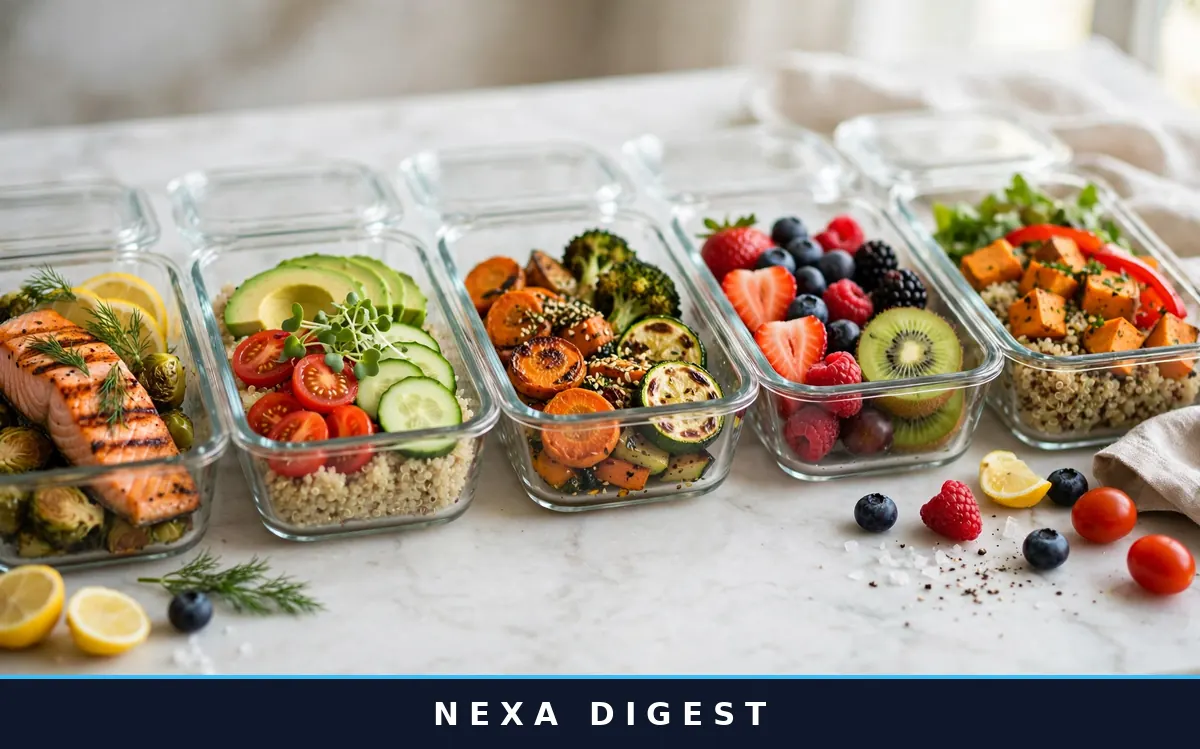
This 7-day plan puts a balanced diet for beginners into action. Affordable, easy-to-find foods, with ingredients repeating across days to cut waste and cost. Adjust portions to your appetite; swap any protein for a vegetarian equivalent.
Monday
- Breakfast: Oatmeal with banana, walnuts, and cinnamon
- Lunch: Grilled chicken wrap with salad in a whole-wheat tortilla
- Snack: Apple with peanut butter
- Dinner: Baked salmon, brown rice, and steamed broccoli
Tuesday
- Breakfast: Greek yogurt with berries and granola
- Lunch: Lentil soup with a whole-grain roll
- Snack: Carrot sticks with hummus
- Dinner: Turkey stir-fry with mixed vegetables and quinoa
Wednesday
- Breakfast: Whole-grain toast with avocado and boiled eggs
- Lunch: Chickpea and vegetable salad with olive oil
- Snack: Small handful of mixed nuts
- Dinner: Grilled chicken, roasted sweet potato, and green beans
Thursday
- Breakfast: Smoothie with spinach, banana, yogurt, and peanut butter
- Lunch: Tuna and white bean salad on mixed greens
- Snack: Orange slices
- Dinner: Vegetable and tofu curry with brown rice
Friday
- Breakfast: Oatmeal with berries and chia seeds
- Lunch: Quinoa bowl with black beans, corn, and peppers
- Snack: Greek yogurt
- Dinner: Baked cod with roasted vegetables and new potatoes
Saturday
- Breakfast: Scrambled eggs with spinach and whole-grain toast
- Lunch: Chicken and vegetable soup with crusty whole-grain bread
- Snack: Pear with a few almonds
- Dinner: Homemade bean chili with brown rice and salad
Sunday
- Breakfast: Whole-grain pancakes with fruit and yogurt
- Lunch: Leftover chili in a wrap with salad
- Snack: Banana
- Dinner: Roast chicken with roasted root vegetables
See the rhythm? Protein at every meal, vegetables everywhere, whole grains as the base, snacks that keep you full. A week of this and the plate method feels automatic.
Smart Snacking: The 2-Macro Rule
Snacks are where beginners quietly fall apart — most grab-and-go options are refined carbs that spike blood sugar, then drop you flat. Fix: the 2-macro rule. Pair two macros, ideally with protein or fat. More: healthy snacks that keep you full for hours.
- Apple slices with peanut butter (carbs + fat and protein)
- Greek yogurt with berries (protein + carbs)
- Hummus with vegetable sticks (protein + fiber)
- A small handful of nuts with a piece of fruit (fat + carbs)
- Cottage cheese with pineapple (protein + carbs)
- Hard-boiled eggs with cherry tomatoes (protein + fat)
Keep one or two within reach — desk, bag, fridge at eye level. Hunger kills good decisions; a planned snack beats a vending machine every time.
Eating Out Without Ruining Your Progress
Good news: a social life and a balanced diet coexist. Eating out is a skill — it gets easier with practice:
- Scan for the plate method: protein plus vegetable plus whole grain. Grilled fish with roasted veg and rice is a classic safe pick.
- Ask for swaps: fries for salad, dressing on the side, water over soda. Restaurants handle these all day.
- Watch hidden extras: bread baskets, sugary cocktails, creamy sauces can quietly double calories. Enjoy on purpose, not by default.
- Plan, do not punish: indulgent dinner ahead? Eat lighter and veg-rich earlier. Never skip meals to “save up” — you will arrive starving and overeat.
How to Read a Nutrition Label in 30 Seconds
Packaged foods are not the enemy, but the label tells you if a product earns a regular spot. Check four things:
- Serving size first. Numbers refer to one serving; packs often hold two or three. That “200-calorie” snack with 2.5 servings? Really 500. Sneaky.
- Added sugars. Aim for little to none. Sugar, syrup, honey, or “-ose” near the top means sweetener in a health costume.
- Fiber and protein. Higher is better. Breads and cereals: look for 3+ grams of fiber per serving.
- Sodium. Compare and pick lower. Breads, soups, sauces hide the most.
Shorter ingredient list with recognizable real foods = usually better.
7 Beginner Mistakes to Avoid
The biggest mistake in a balanced diet for beginners is not a food choice at all — it is the mindset. Watch for these traps:
- All-or-nothing thinking. One off-plan meal is not failure. Ditching the week because of it is. Resume at the next meal.
- Skipping meals to “save” calories. Backfires: raging hunger, low energy, then overeating. Regular meals stabilize appetite.
- Drinking your calories. Sodas, sweetened coffees, juices — hundreds of calories, zero fullness. Water first, treats occasionally.
- Fearing entire food groups. Carbs and fats are essential. The problem was never the group — it is the dose and source.
- Protein-free breakfasts. Pastry-only mornings guarantee a crash. Add eggs, yogurt, or nuts.
- Eating distracted. Screens mute fullness signals. Five screen-free minutes per meal sharpens awareness.
- Changing everything day one. Overhauls collapse. One habit weekly — water, then veg, then breakfast — and momentum compounds.
Balanced Eating on a Budget

Time to kill a myth: a balanced diet for beginners does not have to be expensive. Honestly, some of the healthiest staples are the cheapest foods in the store — oats, dried beans, lentils, rice, eggs, bananas, carrots, cabbage, frozen vegetables. A few rules multiply the savings:
- Buy frozen produce. Often half the price of fresh, just as nutritious, zero waste.
- Build meals around cheap proteins. Beans, lentils, eggs, tinned fish — serious nutrition for little money.
- Shop seasonal. In-season produce can cost 30 to 50 percent less than imports.
- Cook once, eat twice. Doubling dinner hands you tomorrow’s lunch free.
- Stop wasting food. Meal planning plus a weekly “use it up” stir-fry night cuts your bill directly.
Vegetarian and Vegan Tweaks
A balanced diet works beautifully without meat — just plan around a few nutrients. Combine plant proteins daily (beans with rice, hummus with whole-wheat bread, lentils with quinoa) for essential amino acids. Pair iron-rich lentils and spinach with vitamin C (peppers, citrus, tomatoes) to triple absorption. Vegans need B12 from fortified foods or supplements — no plant source exists — plus calcium from fortified milks, omega-3s from flax or chia.
Balanced Diet for Beginners: Your Questions Answered
What should a beginner eat in a balanced diet?
Start with the plate method: half vegetables and fruit, one-quarter whole grains, one-quarter protein, water on the side. Build every meal from the five food groups and keep changes small enough to repeat daily.
Do I have to give up my favorite foods?
Nope. What matters is the pattern across your week, not any single meal. Many people thrive on 80/20: nourishing choices 80 percent of the time, favorites enjoyed guilt-free the rest.
Is eating a balanced diet expensive for beginners?
Not at all. Oats, beans, lentils, rice, eggs, bananas, frozen vegetables, and seasonal produce are among the cheapest foods you can buy. Cooking at home and cutting waste usually beats takeaways on cost.
How many calories should I eat per day?
Around 2,000 suits many adults, but needs vary with age, size, and activity. Most beginners do better with the hand-portion method and eating slowly until satisfied. For weight goals or medical conditions, see a registered dietitian.
Can I follow a balanced diet as a vegetarian or vegan?
Absolutely. Focus on varied plant proteins (beans, lentils, tofu, chickpeas), whole grains, plenty of produce, and healthy fats. Vegans need reliable B12 from fortified foods or supplements, plus attention to iron, calcium, and omega-3s.
How quickly will I see results?
Energy and digestion often improve within 1 to 2 weeks. Visible changes in weight, skin, or fitness usually take 4 to 8 weeks of consistency. Think months, not days.
Do I need vitamin supplements?
Most people covering the five food groups daily do not need a multivitamin — vitamin D in dark winters is the common exception. Pregnancy, veganism, or deficiencies deserve professional advice, not guesswork.
The Bottom Line
Learning a balanced diet for beginners is a skill, not a test — steady practice beats perfection. Start with the plate method, stock the grocery list, cook a few meals from the 7-day plan, fix one habit at a time. Within weeks, today’s effortful choices feel automatic, and your energy, mood, and health will show it. The best diet is the balanced one you can live with — build yours one plate at a time.
Medical disclaimer: This article provides general nutrition information for educational purposes only and is not medical advice. Everyone’s nutritional needs differ. If you have a medical condition, take medication, are pregnant, or need a personalized plan, please consult a qualified healthcare professional or registered dietitian before making significant dietary changes.