20 Easy DIY Home Projects for Beginners on a Budget
These easy DIY home projects prove you don’t need experience to upgrade your space. You want to improve your home, but every tutorial seems to assume you own a workshop full of power tools. If you are looking for DIY home projects for beginners that actually fit a tight budget, you are in the right place.
Unlike complex renovations, DIY home projects for beginners focus on small, high-impact upgrades: paint, hardware, lighting, and simple fixes. Most of the 20 projects below cost under $100, take less than a day, and need nothing more than basic hand tools you may already own.
Quick answer: The best DIY home projects for beginners are painting an accent wall, swapping cabinet hardware, installing peel-and-stick backsplash tiles, hanging floating shelves, and weatherstripping doors. Each costs under $100, needs only basic tools, and takes less than a day, making them perfect starter projects for any budget.
In this guide, you will get a complete beginner toolkit checklist, 20 projects with honest cost, time, and difficulty ratings, the mistakes to avoid, and the safety basics that keep every project stress-free.
Start With the Right Tools: The $60 Beginner DIY Kit
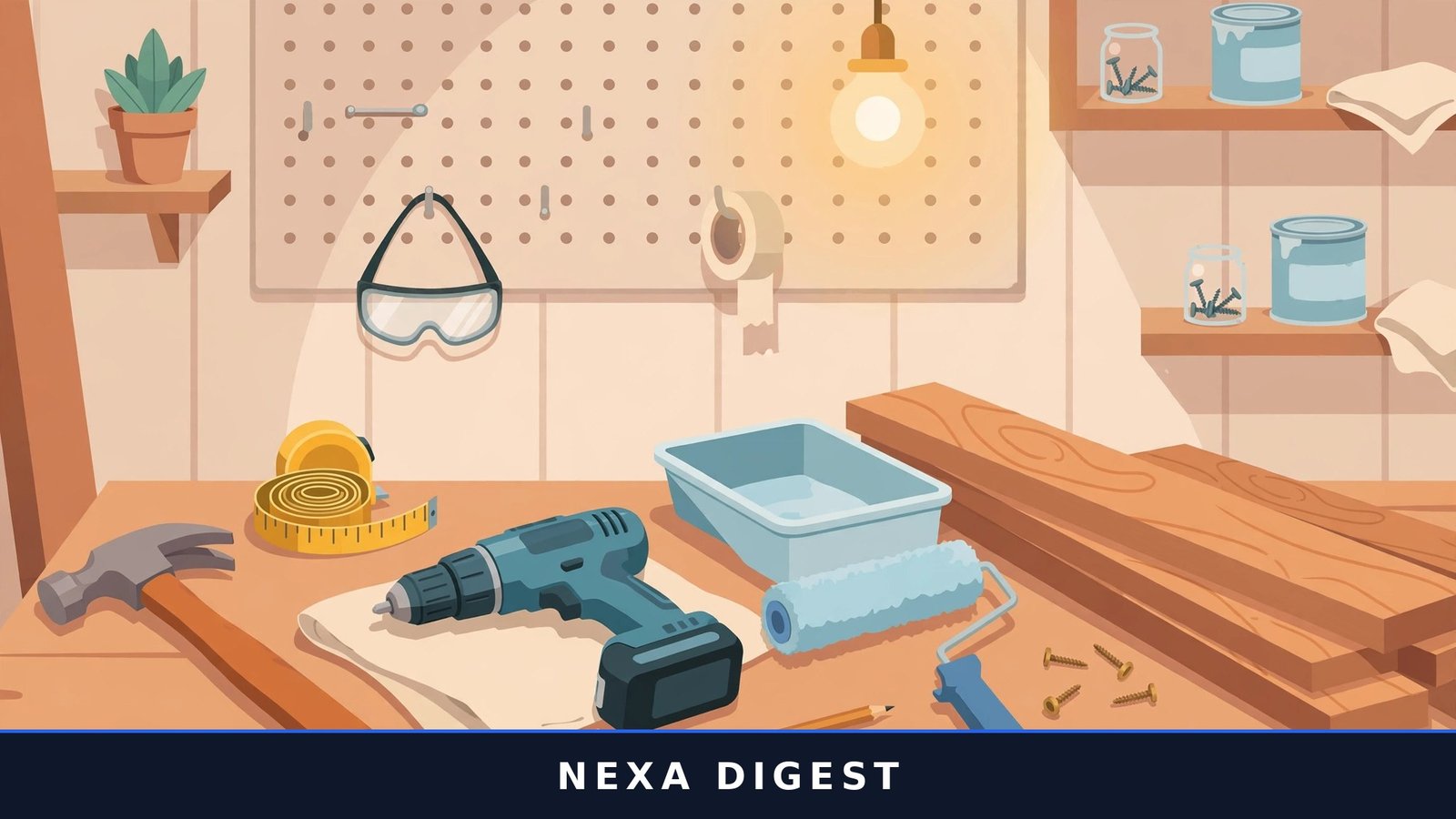
Before you touch a single project, gather a small starter kit. This kit covers 90% of DIY home projects for beginners, and you can build it for about $60 if you shop store brands:
- Tape measure (25 ft) — measure twice, cut once is not just a saying.
- Hammer and screwdriver set — flathead and Phillips cover nearly every fastener in a home.
- Utility knife with extra blades — for opening boxes, trimming caulk, and scoring paint lines.
- Level (24-inch) — the difference between charming shelves and crooked ones.
- Cordless drill/driver — the one power tool worth buying early; a 12V model handles all beginner work.
- Adjustable wrench and pliers — essential for faucet and showerhead swaps.
- Putty knife and painter’s tape — for patching walls and getting crisp paint edges.
- Safety gear — goggles, dust mask, and work gloves on every single job.
For a deeper breakdown, see our must-have DIY tools for homeowners checklist.
How to Choose Your First Project (Without Getting Overwhelmed)
The golden rule of DIY home projects for beginners is simple: finish one small project completely before starting the next. A finished $30 project teaches you more than three half-done $200 ones.
Use this quick filter before you pick:
- Start with “Easy” difficulty only. Build confidence with quick wins before touching anything plumbing or electrical.
- Renters: choose reversible projects — peel-and-stick tiles, removable wallpaper, no-drill hooks, and anything you can undo in an hour.
- One-weekend rule: if a project cannot be finished in a single weekend, save it for later.
- Budget buffer: add 15% to every cost estimate for the extra screws, sandpaper, and second paint roller you will inevitably need.
20 Easy DIY Home Projects for Beginners
Below are 20 DIY home projects for beginners, each with a realistic cost range, time estimate, and difficulty rating. Prices reflect typical USA and UK hardware-store costs in 2026.
1. Paint an Accent Wall
Cost: $40–$80 | Time: 1 day | Difficulty: Easy
Nothing transforms a room faster than a single bold wall. Pick the wall your eyes land on first, clean it, tape the edges, and apply two coats. If your home was built before 1978, check the EPA’s lead-safe guidelines [Gov] before sanding or scraping old paint.
2. Swap Cabinet Knobs and Pulls
Cost: $20–$60 | Time: 2 hours | Difficulty: Easy
Unscrew the old hardware and screw in the new — that is the whole project. Brushed brass or matte black instantly modernizes a dated kitchen. Keep the original knobs in a labeled bag so you can reinstall them when you move out.
3. Install a Peel-and-Stick Backsplash
Cost: $30–$70 | Time: 3–4 hours | Difficulty: Easy
Peel-and-stick tiles mimic ceramic or subway tile at a fraction of the price and with zero grout. Start from the center and work outward, pressing firmly to avoid air bubbles. Fully removable, so renters love this one.
4. Hang Floating Shelves
Cost: $25–$60 | Time: 2–3 hours | Difficulty: Easy
Two shelves above a desk or sofa add storage and style in an afternoon. Use a level and wall anchors rated for your wall type — drywall anchors are a must whenever you miss the studs.
5. Upgrade Switch Plates and Outlet Covers
Cost: $10–$25 | Time: 1 hour | Difficulty: Easy
One of the cheapest upgrades with the biggest payoff. Turn off the breaker first, unscrew the old plates, and screw on the new ones. Never touch bare wires — if anything looks scorched or damaged, stop and call an electrician.
6. Re-Caulk the Bathtub and Sink
Cost: $15–$30 | Time: Half day | Difficulty: Easy
Old, cracked caulk lets water seep behind tiles and breed mold. Scrape it out with a utility knife, clean the joint with rubbing alcohol, and lay a smooth new bead of silicone caulk. Let it cure 24 hours before getting it wet.
7. Add Under-Cabinet LED Strip Lights
Cost: $20–$45 | Time: 1–2 hours | Difficulty: Easy
Peel-and-stick LED strips plug straight into an outlet — no wiring needed. They make kitchens feel larger and food prep safer after dark. Look for ENERGY STAR-certified strips at energystar.gov [Official] to keep energy use tiny.
8. Weatherstrip Doors and Windows
Cost: $15–$40 | Time: 2 hours | Difficulty: Easy
Drafty gaps quietly waste heating and cooling all year. Self-adhesive foam tape or V-strip around doors and windows takes minutes per opening and can noticeably trim your energy bills.
9. Replace the Showerhead
Cost: $25–$60 | Time: 30 minutes | Difficulty: Easy
Unscrew the old showerhead by hand or with a wrench, wrap the threads with plumber’s tape, and twist on the new one. A water-saving model improves pressure feel and pays for itself within months.
10. Build a Raised Garden Bed
Cost: $40–$90 | Time: Half day | Difficulty: Easy–Medium
Four boards screwed into a rectangle and filled with soil is all it takes. Start with herbs or salad greens — they are forgiving and fast. Give it at least six hours of direct sun.
11. Refinish a Thrifted Dresser
Cost: $30–$70 | Time: Weekend | Difficulty: Easy
Sand lightly, wipe clean, and apply two coats of furniture paint plus a protective topcoat. Swap the knobs while you are at it. A $20 flea-market dresser can look boutique-new by Sunday evening.
12. Create a Gallery Wall
Cost: $20–$50 | Time: 2 hours | Difficulty: Easy
Lay your frames on the floor first to plan the arrangement, then hang from the center outward. Mix photos, prints, and one mirror for depth. For more styling ideas, browse our small living room decor ideas.
13. Replace a Kitchen Faucet
Cost: $60–$150 | Time: 1–2 hours | Difficulty: Medium
Turn off the water valves under the sink, disconnect the supply lines, and swap in the new faucet. Keep a bucket and towels handy for residual water. If the shutoff valves are stuck or corroded, call a plumber instead of forcing them.
14. Frame a Builder-Grade Bathroom Mirror
Cost: $20–$40 | Time: 2 hours | Difficulty: Easy
Flat, edgeless mirrors scream “builder basic.” Attach thin molding around the edges with adhesive or clips, then paint it to match your vanity. Instant custom look for the price of lunch.
15. Add Window Boxes
Cost: $25–$55 | Time: 2 hours | Difficulty: Easy
Secure a planter box under a front window with L-brackets and fill it with trailing flowers or herbs. It is the fastest curb-appeal upgrade on this entire list.
16. Swap Interior Door Knobs
Cost: $30–$80 | Time: 2 hours | Difficulty: Easy
Dated brass knobs age an entire hallway. Modern lever handles or matte black knobs install with a single screwdriver in about 15 minutes per door — do the whole house in an afternoon.
17. Install a Smart Thermostat
Cost: $100–$170 | Time: 1–2 hours | Difficulty: Medium
Most models walk you through setup in their app. Turn off the HVAC breaker first and photograph the old wiring before disconnecting anything. A smart thermostat can trim heating and cooling bills year after year.
18. Organize the Pantry With Clear Bins
Cost: $20–$50 | Time: 3 hours | Difficulty: Easy
Decant dry goods into clear containers, label everything, and group items by category. You will waste less food and actually find things. Measure your shelves before buying bins so everything fits the first time.
19. Lay Peel-and-Stick Vinyl Floor Tiles
Cost: $40–$100 | Time: Half day | Difficulty: Easy–Medium
Start with a small room like a laundry or powder room. Clean the subfloor thoroughly, snap chalk lines to find your center starting point, and press each tile firmly — a rolling pin bonds them down.
20. Repaint the Front Door
Cost: $30–$60 | Time: Half day | Difficulty: Easy
Remove the hardware, sand lightly, and apply exterior paint in a bold, welcoming color. A freshly painted door is the highest-return few hours in home improvement. For bigger budget transformations, see our budget home makeovers under $500.
All 20 Projects at a Glance
| Project | Cost | Time | Difficulty |
|---|---|---|---|
| Paint an accent wall | $40–$80 | 1 day | Easy |
| Swap cabinet knobs and pulls | $20–$60 | 2 hours | Easy |
| Peel-and-stick backsplash | $30–$70 | 3–4 hours | Easy |
| Hang floating shelves | $25–$60 | 2–3 hours | Easy |
| Upgrade switch plates | $10–$25 | 1 hour | Easy |
| Re-caulk bathtub and sink | $15–$30 | Half day | Easy |
| Under-cabinet LED lights | $20–$45 | 1–2 hours | Easy |
| Weatherstrip doors/windows | $15–$40 | 2 hours | Easy |
| Replace showerhead | $25–$60 | 30 minutes | Easy |
| Raised garden bed | $40–$90 | Half day | Easy–Medium |
| Refinish a dresser | $30–$70 | Weekend | Easy |
| Gallery wall | $20–$50 | 2 hours | Easy |
| Replace kitchen faucet | $60–$150 | 1–2 hours | Medium |
| Frame bathroom mirror | $20–$40 | 2 hours | Easy |
| Window boxes | $25–$55 | 2 hours | Easy |
| Swap door knobs | $30–$80 | 2 hours | Easy |
| Smart thermostat | $100–$170 | 1–2 hours | Medium |
| Pantry organization | $20–$50 | 3 hours | Easy |
| Peel-and-stick floor tiles | $40–$100 | Half day | Easy–Medium |
| Repaint front door | $30–$60 | Half day | Easy |
7 Mistakes Beginners Make (and How to Avoid Them)
The most common reason DIY home projects for beginners go wrong is rushing the prep work. Avoid these seven traps and your projects will look professional:
- Skipping prep. Cleaning, sanding, and taping feel boring, but they decide 80% of the final result — especially with paint.
- Buying the cheapest tools. A $5 brush that sheds bristles into your paint costs more in frustration than a $12 quality one.
- Measuring once. Measure twice, write it down, and measure again before you cut or drill.
- No budget buffer. Add 15% to every estimate; surprise hardware-store runs are part of the process.
- Starting too big. Your first project should not involve plumbing behind walls. Earn your stripes on easy wins first.
- Painting in bad conditions. Cold, humid, or dusty rooms ruin finishes. Aim for 50–85°F with good airflow.
- Working tired. Most DIY injuries happen late in the day. Stop when your focus fades — the project will wait.
DIY Safety Basics You Should Never Skip
These simple safety rules keep DIY home projects for beginners fun instead of painful:
- Gear up every time. Safety goggles, dust mask, and gloves — even for “quick” jobs. Dust and paint fumes are worse than they look.
- Respect electricity. Flip the breaker off before touching switches, outlets, or light fixtures, and test with a non-contact voltage tester.
- Ladder safety. The U.S. Consumer Product Safety Commission [Gov] reports thousands of ladder injuries at home each year — keep three points of contact and never stand on the top rung.
- Ventilate. Open windows and use fans when painting or using solvents and adhesives.
- Know your limits. If a task involves the breaker panel, gas lines, or structural changes, that is a professional’s job (see below).
When to Call a Professional Instead
Knowing when not to DIY is a skill in itself. Call a licensed pro for:
- Anything inside the breaker panel or new electrical circuits
- Major plumbing — moving pipes, water heaters, sewer lines
- Structural changes or load-bearing walls
- Gas lines and gas appliances — always a professional, no exceptions
- Roof work beyond a simple shingle patch
Calling a pro for the risky 5% lets you confidently DIY the other 95%.
Your First Weekend Game Plan
Here is a realistic schedule that finishes three projects in two days:
- Saturday morning: Build your toolkit, then swap the cabinet knobs (Project 2) and upgrade the switch plates (Project 5).
- Saturday afternoon: First coat on the accent wall (Project 1).
- Sunday morning: Second coat, then weatherstrip the front door (Project 8).
- Sunday afternoon: Replace the showerhead (Project 9) and admire your work.
Three finished projects in one weekend is how beginner DIY skills become a lifelong habit.
Frequently Asked Questions
What are the easiest DIY home projects for beginners?
The easiest DIY home projects for beginners include swapping cabinet hardware, upgrading switch plates, replacing a showerhead, and hanging floating shelves. Each needs only basic hand tools, costs under $60, and takes under three hours.
How much should a beginner budget for DIY home projects?
Most beginner projects cost $15–$100 in materials. A realistic starter budget is $200–$300, which covers a basic toolkit (about $60) plus two or three projects. Always add a 15% buffer for unexpected extras.
What tools do I need to start DIY home projects?
You need a tape measure, hammer, screwdriver set, utility knife, level, cordless drill, adjustable wrench, pliers, putty knife, painter’s tape, and safety gear (goggles, mask, gloves). This kit handles about 90% of beginner-level work.
Can renters do DIY home projects?
Yes — stick to reversible projects: peel-and-stick backsplash tiles, removable wallpaper, no-drill hooks and shelves, new showerheads, and switch plates. Keep all original hardware in labeled bags so you can restore everything when you move out.
How long does a typical beginner DIY project take?
Most beginner projects take 1–4 hours. Painting projects usually need a full day including drying time between coats, while hardware swaps and lighting upgrades are often done in under two hours.
Are DIY home projects safe for complete beginners?
Yes, as long as you stick to Easy-rated projects, wear safety gear, and respect electricity and ladders. Avoid breaker panels, gas lines, and structural work — those always require a licensed professional.
Which DIY projects add the most home value?
Painting (especially the front door and kitchens), updated cabinet hardware, modern lighting, and improved curb appeal like window boxes offer the best return for the lowest cost. Even small upgrades make a home feel newer to buyers and appraisers.
Conclusion
These 20 DIY home projects for beginners prove you do not need a big budget or years of experience to transform your home. Start with one easy win — new cabinet knobs, a fresh accent wall, brighter under-cabinet lighting — and let each finished project build your confidence for the next.
Pick your first project from the table above, gather the $60 toolkit, and block out a single weekend. By Sunday evening, you will look around your home and see proof that you can do this — because you just did.
—